
From the new scan to a signed report.
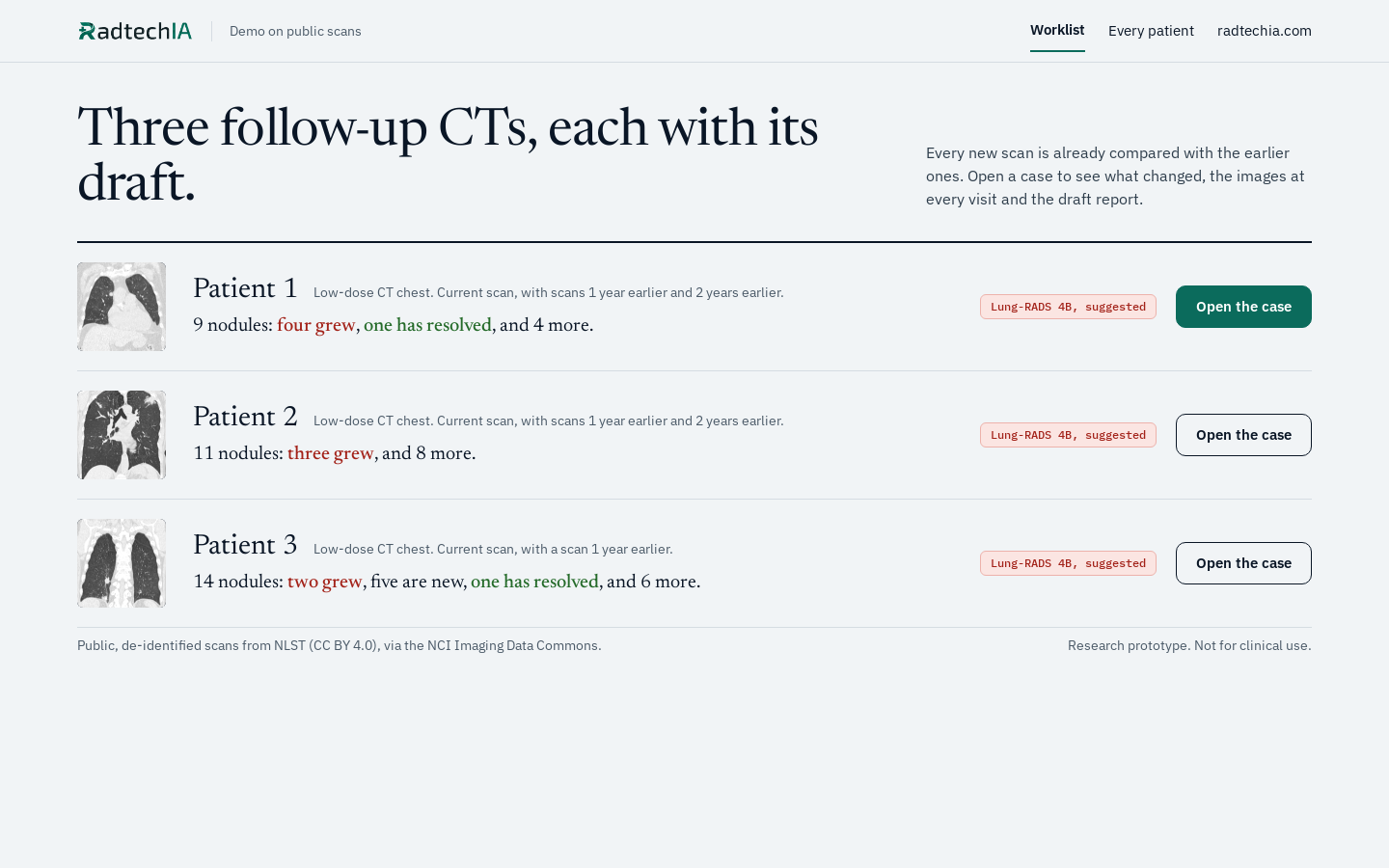
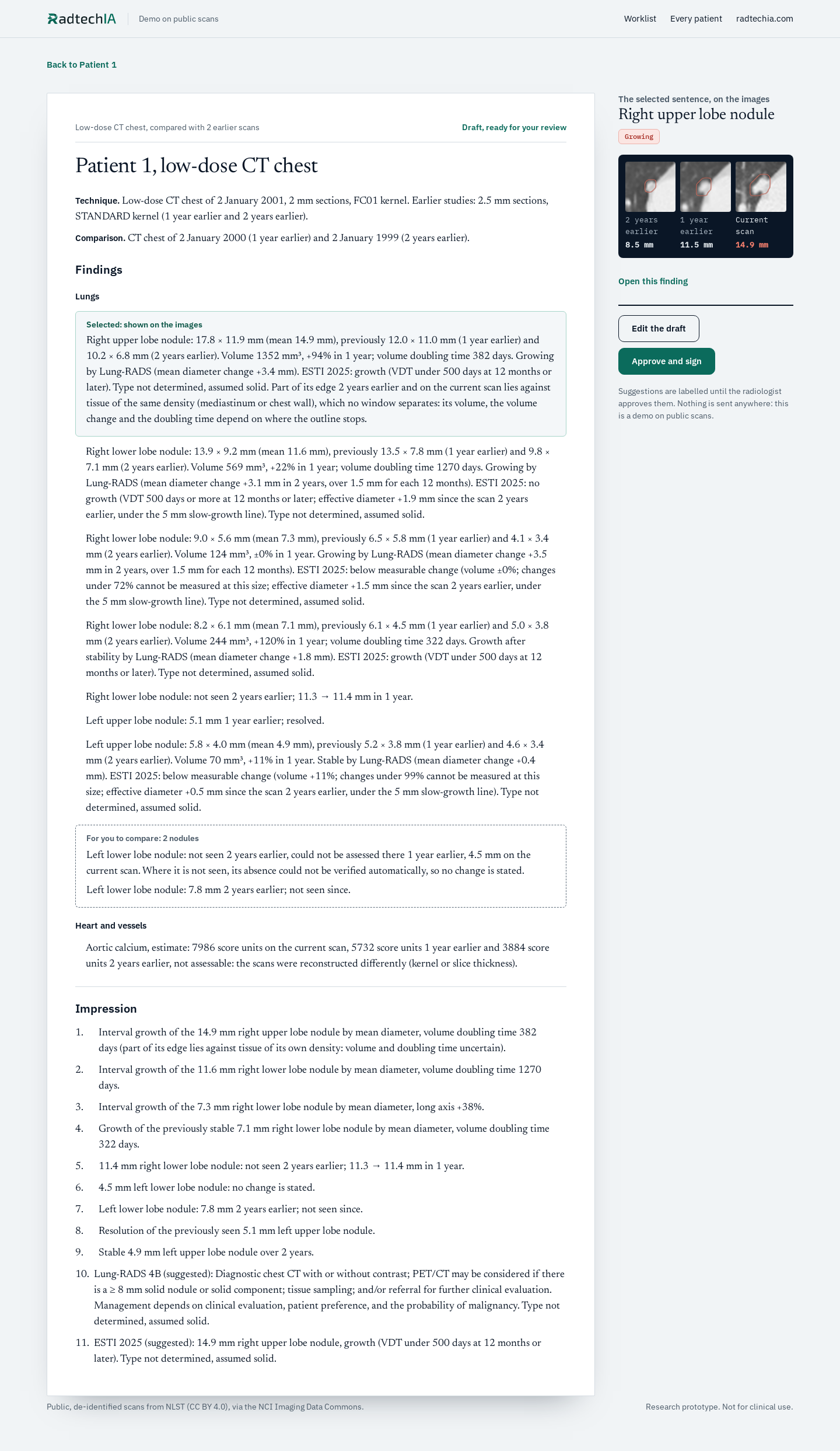
The read in four steps on the radiologist's screen, shown here on Patient 1: earlier scans matched, change measured, category applied and sentence checked, radiologist signs.
A research prototype on public data; its validation against radiologists is under way.
Step 1
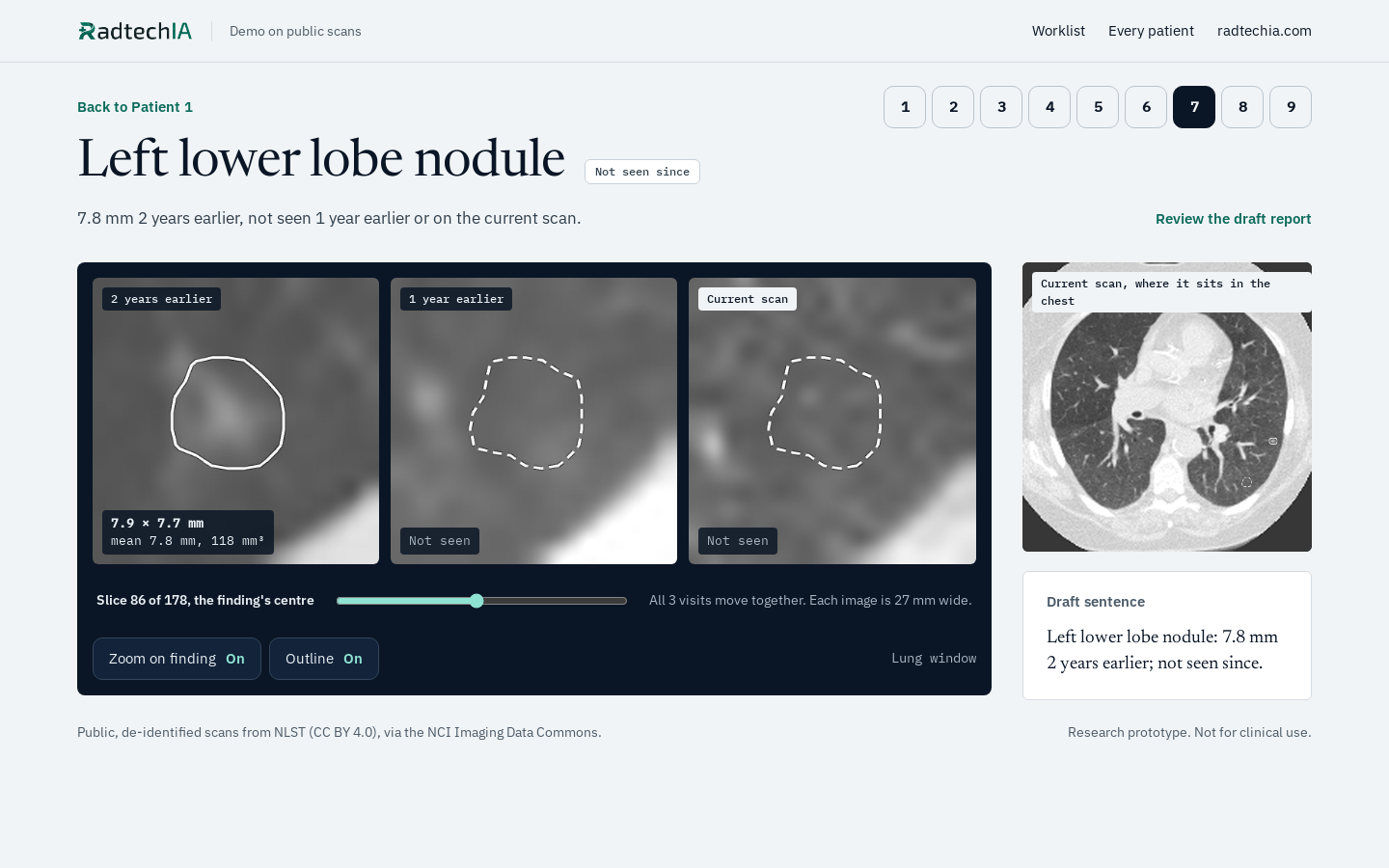
Match the earlier scans.
Each finding on the new scan is matched to the same place on every earlier scan, not just the last. Where nothing is seen, the outline is dashed and the page says so.
Step 2
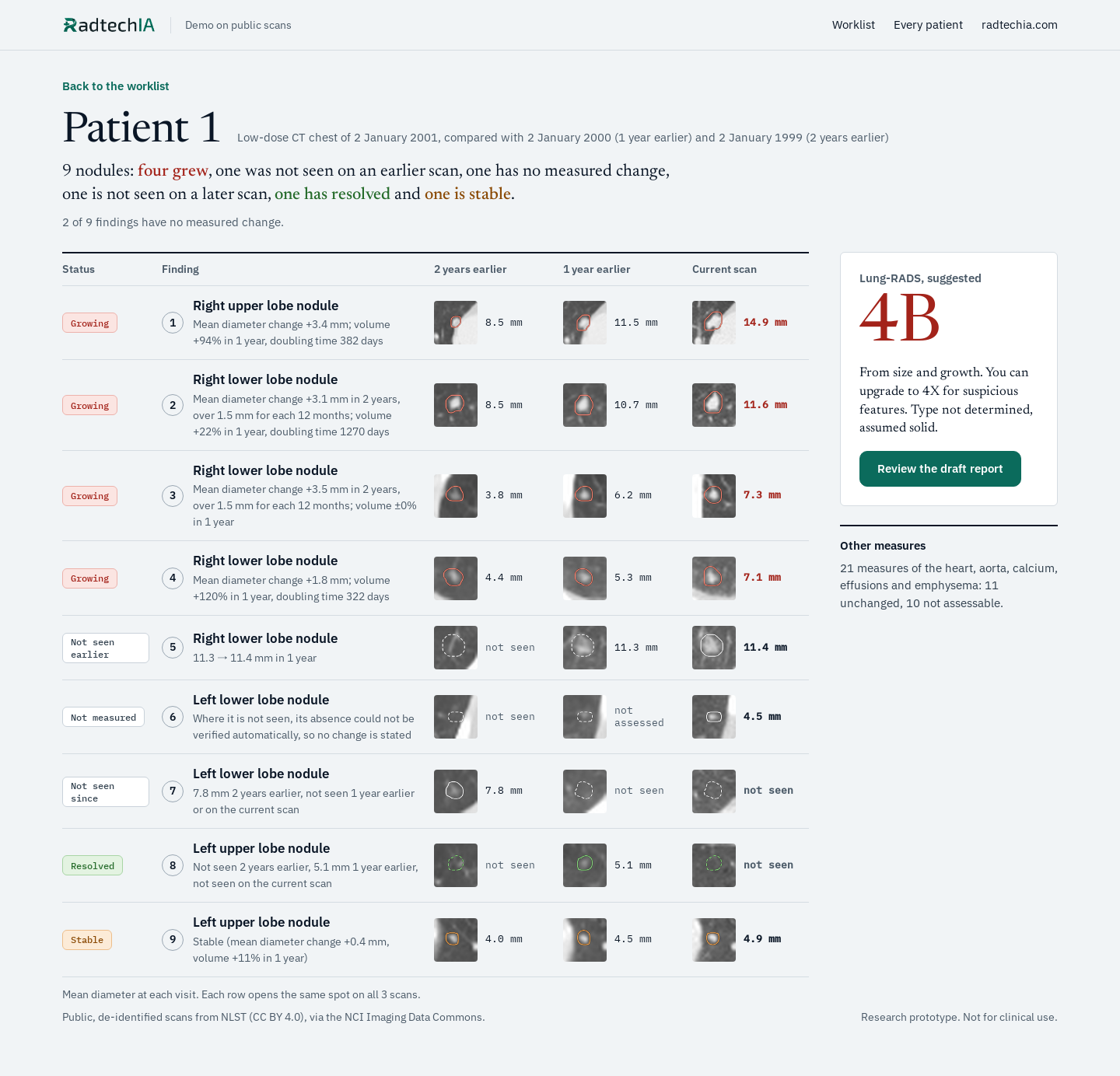
Measure the change.
Every finding with its status in a word and its size at each visit. The ones Radtechia leaves to you are grouped and counted.
Step 3
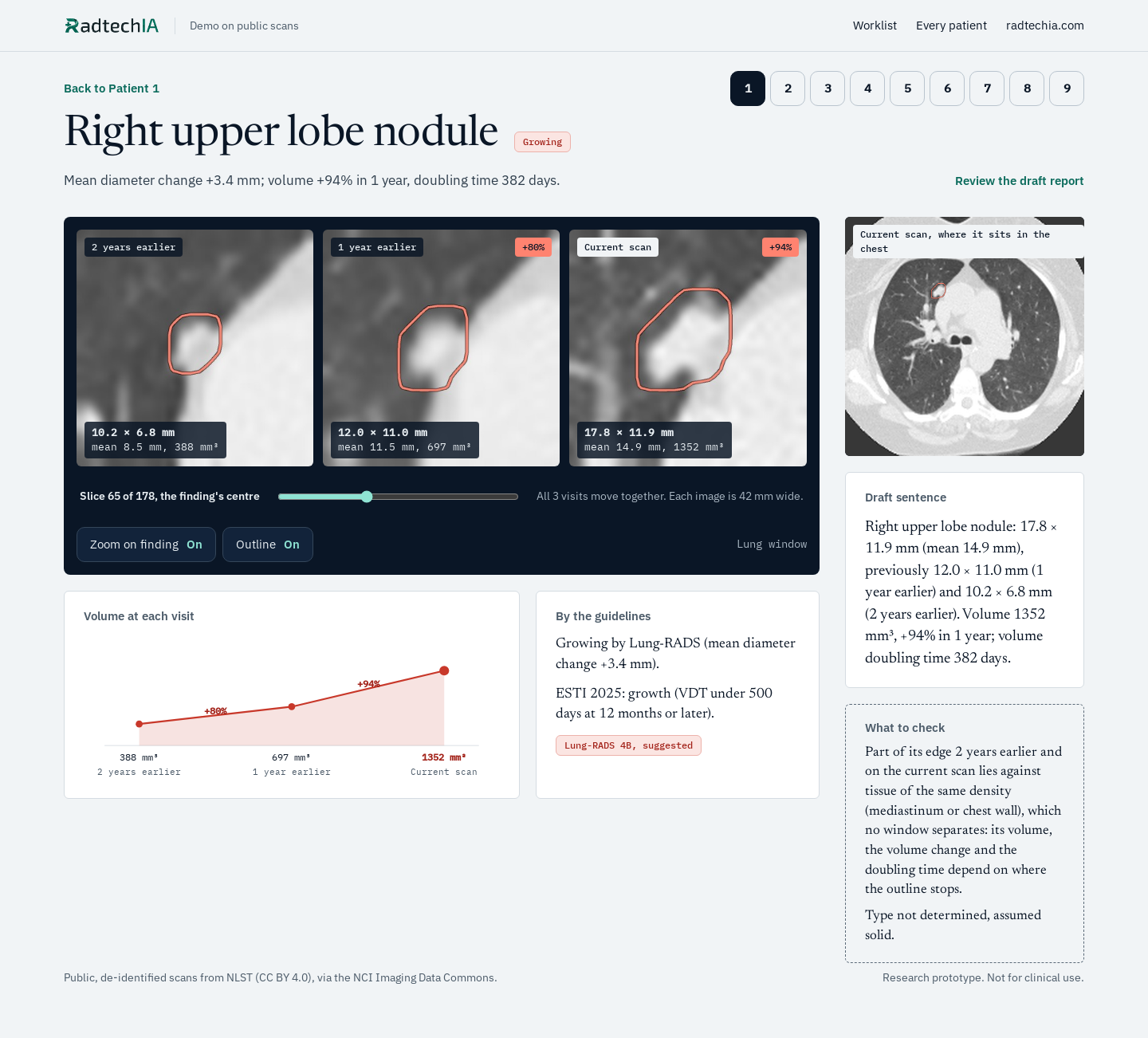
Apply the category. Check the sentence.
Open any finding: the same place at every visit, side by side, outlined where it was measured, with its sizes and volumes. Its guideline category follows from them, and its sentence opens these images to be checked.
Step 4
Read the draft. Sign.
The radiologist reads the draft. Each sentence opens its images. Tick each finding you have checked, edit a word if you like, then approve and sign.
See the whole read on a real case.
Book a demo: we take you through the whole read on public scans.